

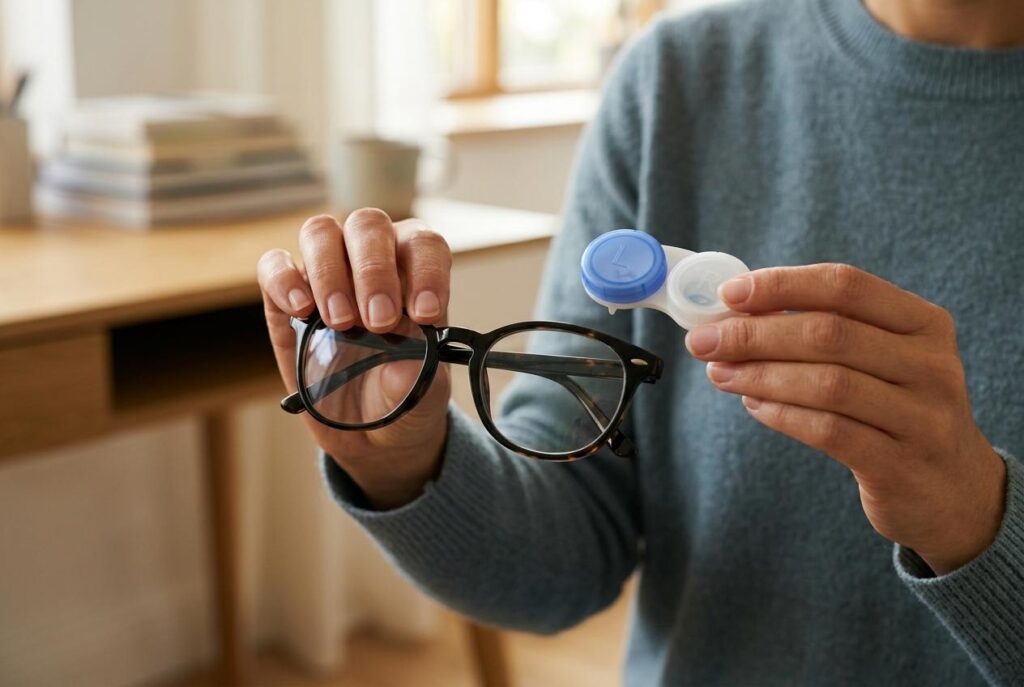
Getting your eyes checked is a great step toward clear vision. Once you have that glasses prescription slip in your hand, you might wonder if you can just hand that same slip to an online contact lens retailer and place your order. It seems like it should work that way, but there’s a catch most people don’t realize until something goes wrong.
A glasses prescription and a contact lens prescription are not the same thing, and using one in place of the other can affect your comfort, your vision clarity, and even your eye health.
Why These 2 Prescriptions Are Different
The biggest difference between these prescriptions comes down to placement. Glasses sit roughly 12 millimeters away from your eyes, while contact lenses rest directly on the surface. That small difference in distance changes how light bends and focuses on your retina.
Because of that, the same correction strength that works beautifully in frames may be too strong or too weak for contact lenses. Each prescription must be tailored to the exact method of correction you plan to use.
What Each Prescription Actually Includes
Your glasses prescription focuses on correcting your vision. It includes several key measurements to help the lab craft your lenses:
- Sphere (SPH): This number tells the lab how much correction your eyes need for nearsightedness or farsightedness.
- Cylinder (CYL) and Axis: These numbers work together to correct astigmatism and indicate the specific direction of the correction.
- Pupillary Distance (PD): Measure this accurately and ensure the lab centers your lenses correctly with your pupils.
Without these measurements, your glasses won’t sit correctly in front of your eyes, and you’ll feel off every time you put them on.
Extra Details on a Contact Lens Prescription
A contact lens prescription goes a step further to provide a safe, comfortable fit directly on your eye. It requires a few extra details:
- Base Curve and Diameter: These numbers describe the exact shape of your cornea and determine how the lens rests on your eye.
- Brand and Material: An optometrist carefully selects a lens that matches your eye’s unique needs, whether that’s a daily disposable, a toric lens for astigmatism, or something designed for extended wear.
What to Expect During a Contact Lens Fitting
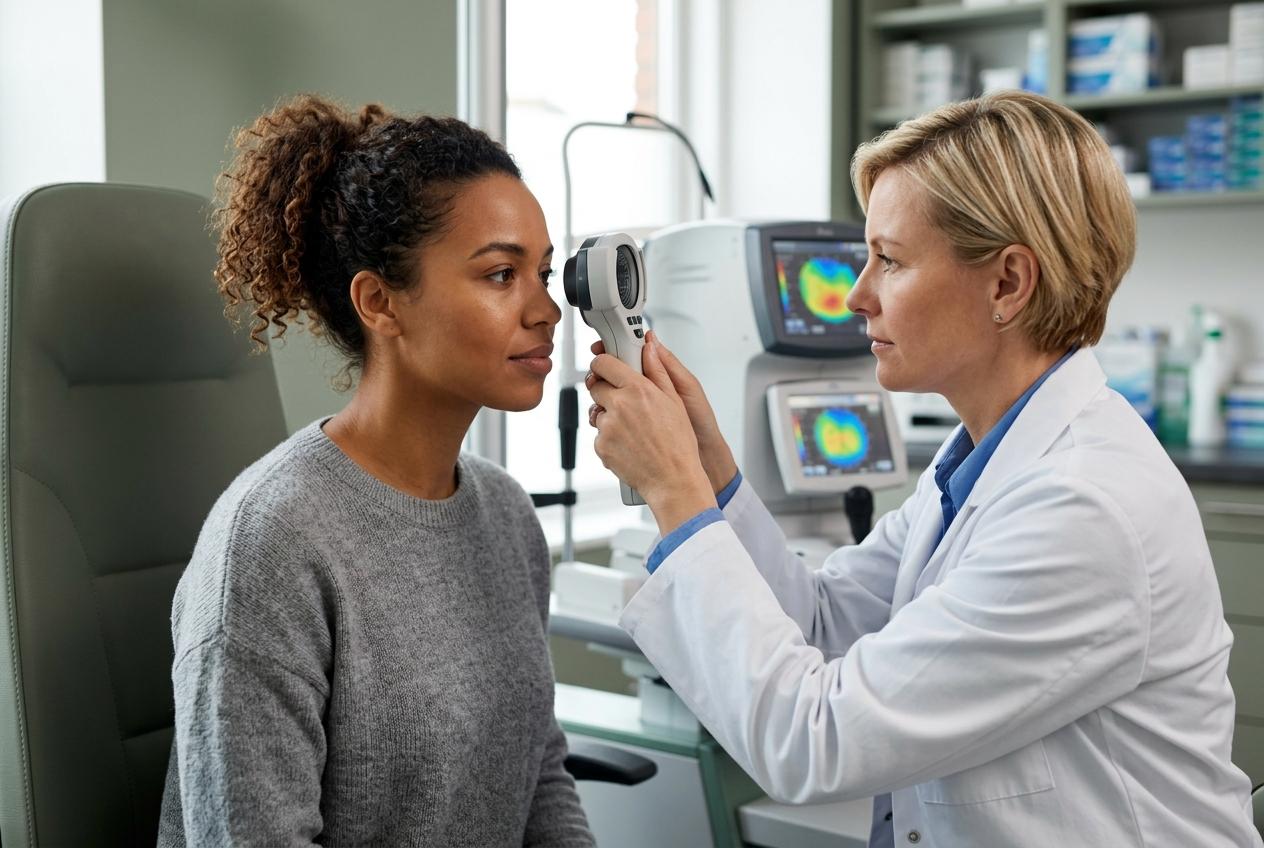
A contact lens exam includes everything in a regular eye exam, plus a few extra measurements. Your optometrist will map the size and shape of your cornea. This helps match you to a lens that sits comfortably without moving around or causing irritation throughout your day.
Your tear film also gets evaluated during the fitting. If your eyes don’t produce enough moisture, certain lens types can become uncomfortable quickly. If dry eyes are already a concern, dry eye therapy options can be discussed during that same visit.
After measurements, you’ll typically receive a trial pair to wear at home for a week or two. This real-world test period matters because how a lens feels in a clinical setting doesn’t always match how it feels after a full day at a screen or outdoors in the wind.
A follow-up visit wraps up the process. Your optometrist checks the fit, asks about your comfort, and confirms your vision clarity. Only after that visit can your contact lens prescription be finalized and written.
Can You Convert a Glasses Prescription to Contacts?
You might come across online conversion tools or charts that claim to translate your glasses prescription into contact lens numbers. Relying on these charts can be tempting, but these tools can’t account for your corneal shape, your tear film, or how a specific lens material interacts with your eye. They’re not a safe substitute for a proper fitting.
Avoid online converters and schedule an in-person evaluation. Wearing contacts based on an unconverted or incorrect prescription can lead to blurry vision, irritation, or a higher risk of infection. See a licensed optometrist to have your eyes evaluated in person before you purchase your contacts.
How Often Should You Update Your Prescription?
Contact lens prescriptions are typically valid for one year. Annual exams give your optometrist a chance to check that the fit still matches your corneal shape, that your vision correction is still accurate, and that your eyes are tolerating the lenses well. A lot can change in a year, so keeping your visits consistent helps detect those changes early.
It’s Time to Get the Vision You Deserve
Understanding your prescriptions doesn’t have to be confusing. Whether you’re new to contacts or just overdue for an update, The Eye Gallery is ready to walk you through the process and help keep your prescription accurate for whatever you’re wearing.
Clearer vision awaits! Reach out today to schedule your appointment.