
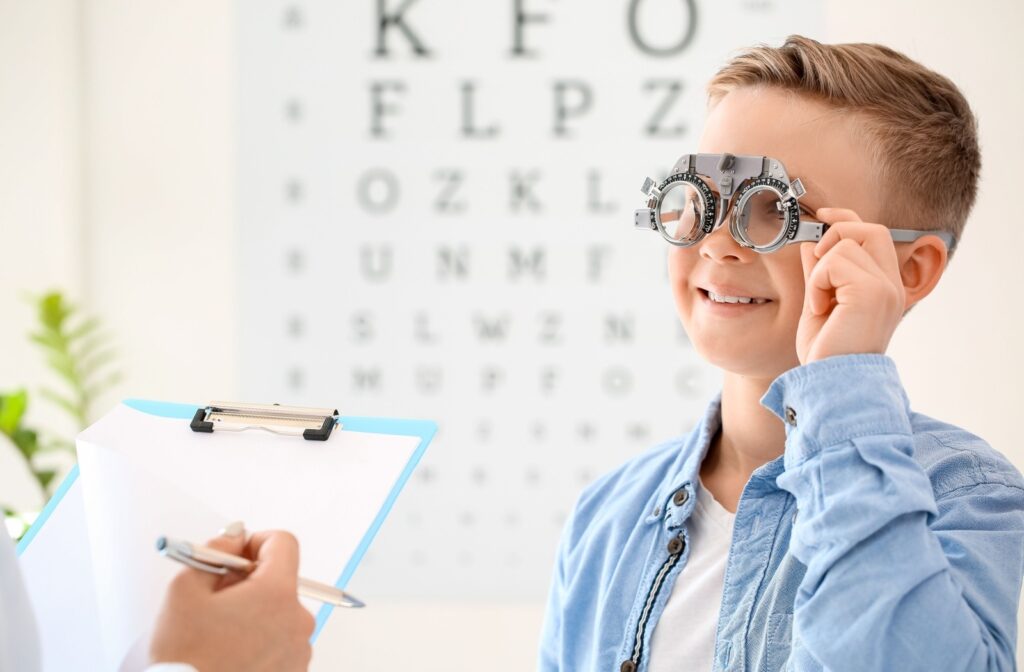
Maybe you’re squinting at a road sign, leaning in closer to read something across the room, or noticing your child holding a book way too close to their face. At The Eye Gallery, we understand how unsettling these moments can be, and we want you to know it’s completely normal to wonder if your or your child’s vision could get worse.
Myopia can progress over time, especially during childhood and teenage years, but it often stabilizes in early adulthood. Knowing what to expect at each stage of life can help you make informed decisions about slowing down its progression.
What Myopia Actually Does to Your Vision
Myopia happens when the eye grows slightly too long from front to back. This causes light to focus just in front of the retina (the back of your eye) rather than directly on it, making distant objects look blurry. Your close-up vision usually stays sharp, so reading and screen work might feel fine, but a stop sign across the street may look fuzzy.
Kids might not tell you if their vision is blurry, sometimes because they don’t know what “normal” vision should look like. You know your child better than anyone, so understanding the signs of myopia can help you tell when it might be time to book them in for an eye exam.
Symptoms Worth Paying Attention To
If you notice any of these signs, it’s probably time to schedule a visit to your eye doctor:
- Frequent headaches or eye fatigue, especially after school or screen time.
- Squinting to see distant objects like the board at school or a TV across the room.
- Trouble reading signs, scoreboards, or anything at a distance.
How Myopia Changes from Childhood to Adulthood
Myopia most often develops between ages 8 and 12, during a major period of eye growth. During these years, the eyes are growing rapidly, which means myopia tends to progress fastest, and you’ll likely see prescription changes every year.
The good news is that myopia usually stabilizes around age 20, once the eye finishes growing. For many people, the prescription levels off and stays fairly consistent through adulthood.
When Myopia Can Still Happen in Adults
Adults aren’t completely off the hook. If you spend a lot of your day doing close-up work, like staring at a computer screen for hours, your vision can still shift. Some people experience a gradual increase in their prescription well into their 30s, particularly if their lifestyle involves a lot of near-focus activity like working on a computer.
Eye elongation can also continue in some adults, though it’s less common than in children. This is why yearly eye exams still matter even after your vision seems to have settled. Research also shows that high myopia significantly raises the risk of serious eye conditions like glaucoma and retinal detachment later in life, which makes consistent monitoring even more worthwhile.
What Makes Myopia Progress Faster
Lifestyle Factors That Play a Role
The way your child spends their day has a real effect on how quickly myopia develops. Too much screen time and close-up activities can impact developing eyes. On the flip side, time spent outdoors in natural light has been associated with lower rates of myopia in children.
Sleep also plays a bigger role than most people realize. Children who don’t get enough quality sleep may experience faster changes in their vision. Encouraging outdoor play and a consistent sleep schedule are 2 of the simplest ways to support healthy eye development for your children.
Genetics and Family History
If 1 parent is nearsighted, a child has a higher chance of developing myopia. If both parents are nearsighted, that risk goes up even more. This doesn’t mean myopia is a certainty, but it does mean it’s worth watching for early signs.
Every child’s eye grows at a different rate, so 2 siblings with the same family history might have very different experiences with myopia. Regular exams help catch changes before they go unnoticed for too long, which is important because vision is key for learning in school, playing sports, and more.
Can You Stop Myopia from Getting Worse?
You can’t reverse myopia, but there are options to help slow its progression. Encouraging kids to spend at least 1–2 hours outdoors each day and taking regular breaks from close-up work are simple habits that can make a difference. There are also professional myopia control options available.
Myopia Control Options to Know About
Beyond lifestyle changes, our eye doctors in Wichita can recommend specific treatments designed to help manage myopia in children. These may include options like:
- MiSight contact lenses, which are a specialty soft lens approved for children ages 8 to 12, have been clinically shown to help slow myopia progression.
- Orthokeratology, or ortho-k lenses, are worn overnight to gently reshape the cornea and temporarily correct vision during the day.
A conversation with an eye doctor can help you determine which myopia management approach might fit your child’s age, prescription, and daily routine.
Why Regular Eye Exams Matter at Every Age
A prescription that worked last year might not be cutting it today, especially for a child whose eyes are still changing. Staying current with eye exams helps make sure your vision correction is actually doing its job. It also gives an eye doctor the chance to spot progression early and step in with a plan before things change significantly.
When to Schedule a Visit
- Children should have their first eye exam between 6 and 12 months old.
- Annual exams are recommended for most school-age kids, especially if myopia has already been diagnosed.
- Adults with myopia can benefit from yearly checkups to catch any gradual shifts in vision.
Schedule Your Eye Exam
Our team offers comprehensive eye exams for every member of your family, from your newest addition to your grandparents. Our team is ready to answer your questions about myopia, walk you through control options, and help you stay on top of your family’s eye health. Reach out today to schedule an appointment.