

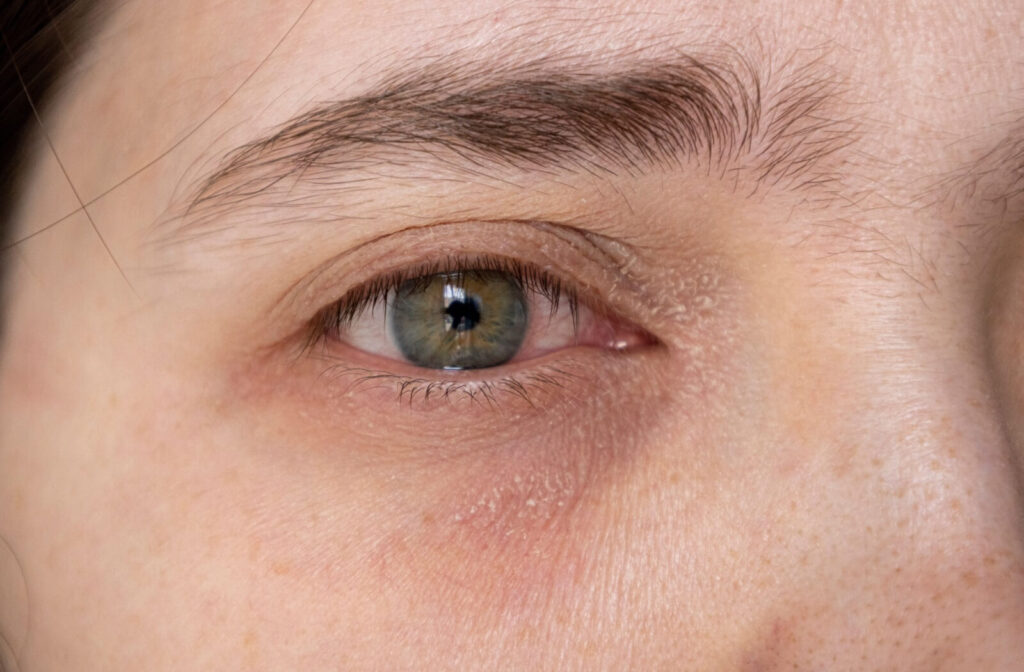
Your eyes feel gritty and uncomfortable, but you’re not sure if it’s just tiredness or something more. Maybe you’ve noticed your vision gets blurry during long computer sessions, or your eyes water unexpectedly throughout the day.
You can identify dry eye by looking for key symptoms such as stinging or burning sensations, blurred vision that clears when you blink, and difficulty wearing contact lenses comfortably. However, in order to receive a proper diagnosis, visiting your local eye care team is the first step to finding relief.
Common Signs and Symptoms to Watch For
Dry eye creates distinct sensations that you’ll notice throughout your day. The most common symptom is a stinging, burning, or scratchy feeling that makes you want to rub your eyes constantly. This discomfort often gets worse as the day goes on.
You might also see stringy mucus around your eyes, especially when you wake up in the morning. Light sensitivity becomes noticeable, too, as bright lights or sunshine make you squint more than usual, and your eyes may appear red or bloodshot.
Vision-Related Symptoms
Your vision tells its own story about dry eye. Blurred vision that improves when you blink is often a telltale sign—this happens because blinking spreads tears across your eye surface temporarily.
Surprisingly, watery eyes can signal dryness, too. Your body overcompensates for the lack of quality tears by producing excess water, but these tears don’t stay on your eyes long enough to help. Nighttime driving can become more challenging because your eyes struggle to maintain clear focus in low light.
Daily Activities That Can Become Challenging
Contact lenses can become your enemy when you have dry eye. They can feel uncomfortable from the moment you put them in, or you may not be able to wear them as long as you used to. Some people find they can’t wear contacts at all anymore.
Computer work may also exhaust your eyes faster than normal. You may feel tired and strained after just a short time looking at screens. There’s also that persistent feeling like something is stuck in your eyes—like a grain of sand or an eyelash—even when nothing is there.
What Makes Your Eyes Feel Dry
Your tears contain 3 important layers: oil, water, and mucus. When any of these components are missing or imbalanced, your eyes can’t stay properly lubricated. Poor tear quality means your tears evaporate too quickly or don’t spread evenly across your eye surface.
Blocked meibomian glands along your eyelid edges prevent oil from reaching your tears. These tiny glands normally release oils that keep your tears from evaporating, but when they’re clogged, your tears disappear too fast. Sometimes your eyes simply don’t produce enough tears naturally to keep up with daily demands.
Environmental Factors That Can Make It Worse
Your surroundings play a big role in dry eye symptoms. Air conditioning, heating systems, or fans blowing directly on your face pull moisture away from your eyes faster than your body can replace it.
Computer work also reduces your blink rate by about half, which means your eyes don’t get refreshed with new tears as often as they need. Dry climates and high altitudes also make symptoms worse because there’s less moisture in the air around you.
Risk Factors That Increase Your Chances
Once you reach 50, your body naturally produces fewer tears. This normal aging process makes dry eye more common in older adults, but younger people can experience symptoms, too.
Hormonal changes from pregnancy, menopause, or hormone therapy can alter tear production. Many medications also reduce tear production, including antihistamines for allergies, antidepressants, and blood pressure medications.
Medical Conditions That Can Contribute
Autoimmune disorders like rheumatoid arthritis and Sjögren’s syndrome directly affect your body’s ability to produce tears. These conditions affect your immune system’s relationship with the glands that make tears and saliva.
Diabetes and thyroid conditions can also impact tear production and eye surface health. Previous eye surgery, especially LASIK, sometimes leads to temporary or permanent dry eye symptoms. Long-term contact lens wear can also change how your eyes produce and distribute tears. Research shows that aging increases the risk of dry eye disease through various biological changes in tear-producing glands.
When to See an Eye Doctor

Don’t wait weeks to seek help if your symptoms persist. When dry eye symptoms last more than a few days, or when over-the-counter drops don’t provide relief, it’s time for professional evaluation. Your daily life shouldn’t revolve around eye discomfort.
Pay attention if your vision becomes consistently blurry, even after blinking. This can indicate that your dry eye is affecting your ability to see clearly, which impacts everything from driving to reading. For comprehensive evaluation, experienced eye doctors in Wichita can provide thorough dry eye assessments.
What Your Eye Doctor Can Check
An eye doctor can measure both your tear production and quality using modern tests. These tests show exactly how many tears your eyes make and whether those tears have the right balance of oil, water, and mucus.
Your eye doctor can also evaluate how well your meibomian glands function and examine your overall eye surface health. This comprehensive approach can identify the specific type of dry eye you have, which determines the most effective treatment plan.
Treatment Options That Can Help
Treatment typically starts with artificial tears and may include prescription eye drops that help your eyes produce more natural tears or reduce inflammation. Your eye doctor might recommend specific brands or types based on your symptoms and tear test results.
Lifestyle changes can also provide significant relief. Simple adjustments to your daily routine often make a noticeable difference in how your eyes feel. For severe issues, in-office treatments like punctal plugs or intense pulsed light therapy can provide longer-lasting relief. Modern treatments like IPL and radiofrequency therapy offer targeted solutions for chronic dry eye conditions.
Simple Steps You Can Take Today
Start with easy changes that cost little but can help immediately. Use a humidifier in dry indoor spaces to add moisture to the air around you. This simple step can reduce symptoms significantly, especially during winter months when heating systems dry out your home.
Take regular breaks during computer work. Look away from your screen at something 20 feet away every 20 minutes for at least 20 seconds. Position your computer screen below eye level so you’re looking slightly downward, which reduces the exposed surface area of your eyes and helps your tears last longer.
Find Relief Today
If you’re experiencing persistent dry eye symptoms, our team at The Eye Gallery in Wichita can help identify the root problem and create a treatment plan that fits your lifestyle. Schedule a comprehensive eye exam to get the relief your eyes deserve.